How to Travel Free with Points
Showing you the best places to wander and how to choose the best travel rewards credit cards that turn everyday spending into free flights, hotel stays, and upgrades.
Best Cruise Cabins for Seasickness / Motion Sickness
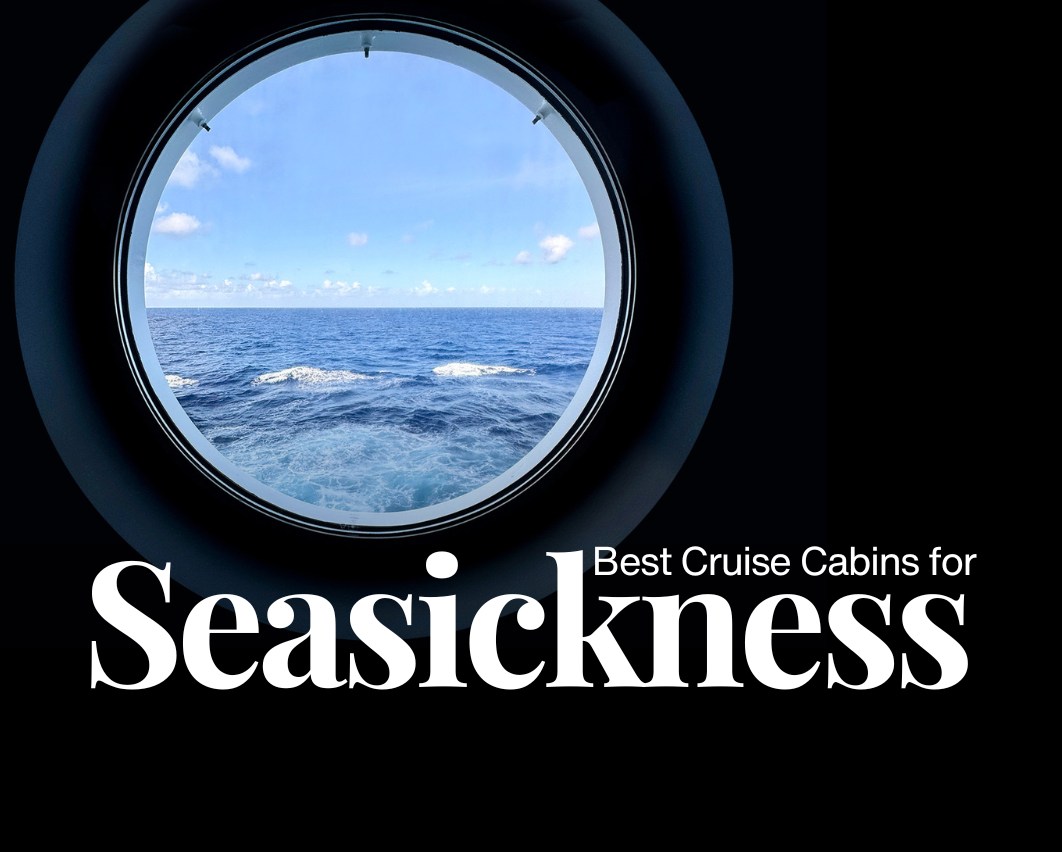
THE GEN X WANDERER / Best Cruise Cabins for Seasickness or Motion Sickness / MSC World America / Deck 6
TABLE OF CONTENTS
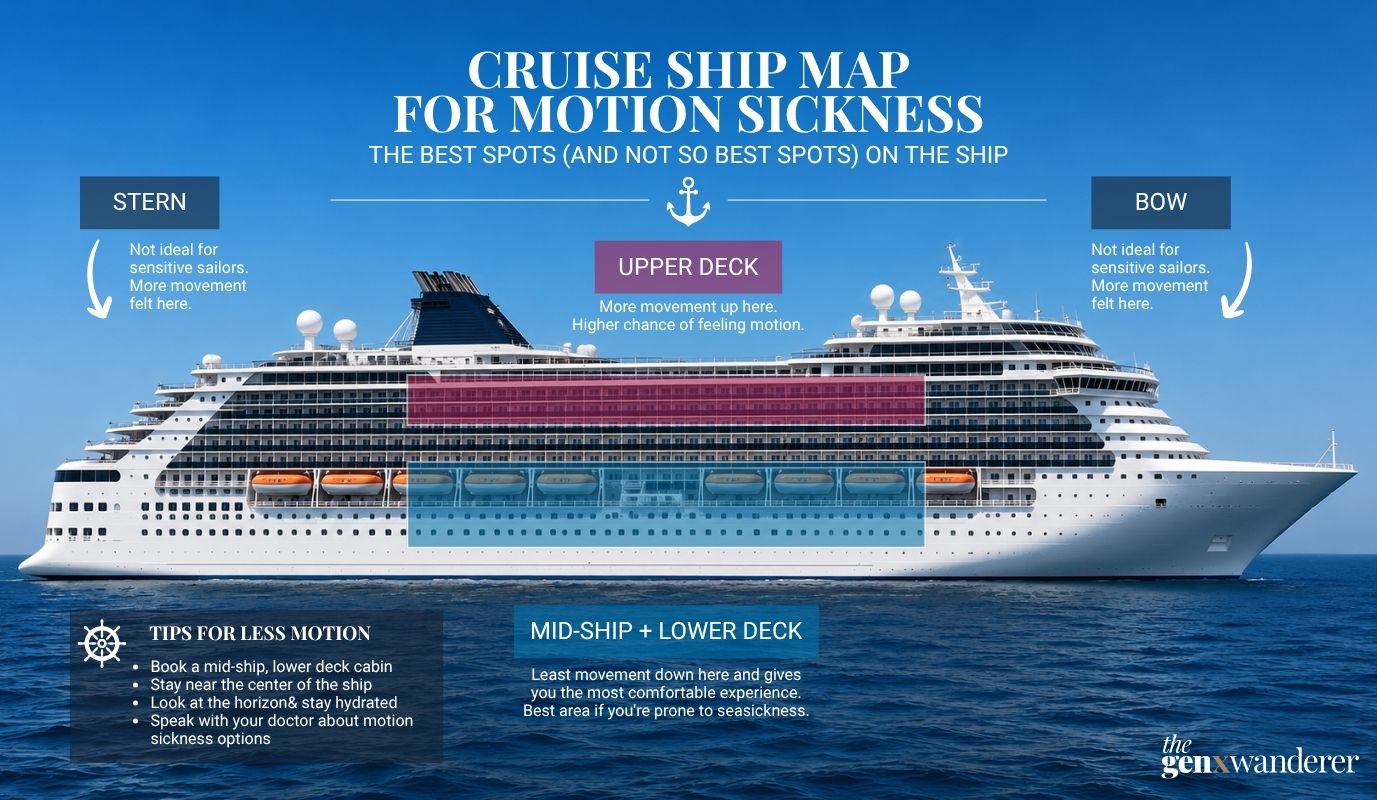
The right cabin location can make or break your cruise experience. So this blog post is going to tell you exactly where to book if you’re prone to feeling queasy at sea.
Take it from me, I suffer from motion sickness and vertigo (the latter mainly due to changes in weather pressure). Living in Canada, we have 4 seasons and even though April is my most favourite month, it’s also the worst for me with sinus pressure.
But let’s get back to cruising.
Seasickness or motion sickness affects a surprising number of cruisers where estimates suggest anywhere from 25% – 40% of travellers experience some degree of sea sickness. But many first time cruisers don’t know that where you sleep on that ship matters enormously. The right cabin can mean the difference between a miserable voyage and a genuinely enjoyable one.
So let me break down exactly the best cruise cabins for seasickness…
Why Ships Make You Feel Sick
Before we talk location, it helps to understand what’s actually happening in your body. Motion sickness occurs when your inner ear (which tracks movement and balance) sends signals that conflict with what your eyes are seeing. On a ship, your body feels the rolling and pitching of the vessel, but if you’re below deck in a windowless cabin, your eyes aren’t registering any movement. Your brain gets confused, and the result is that unpleasant wave of nausea.
Ships move in several ways simultaneously: rolling (side to side), pitching (front to back), and heaving (up and down). The degree to which you feel each of these depends almost entirely on where your cabin is located.
The Golden Rule: Midship, Low, and Center
If you take nothing else from this post, remember this: book a cabin that is as close to the center of the ship as possible: both horizontally (midship) and vertically (a lower or middle deck).
Here’s why this works so well. A ship pivots around its center of gravity, much like a see-saw pivots around its middle point. The closer you are to that pivot point, the less motion you feel. Cabins at the very front (bow) or very back (stern) of the ship experience the most dramatic pitch and roll because they’re at the ends of the lever. Cabins on the highest decks amplify every wave like the top floor of a skyscraper in an earthquake.
A midship cabin on deck 4 or 5 is essentially the sweet spot of stability. You’ll feel the ship move – there’s no cabin on earth that’s completely immune, but the movement will be significantly reduced compared to a balcony suite at the bow on deck 14.
Breaking Down Cabin Locations
Front of the Ship (Bow Cabins) ~ Avoid if Prone to Sickness
Forward cabins have an undeniable romance to them. You’re the figurehead, leading the way into the horizon. But from a motion-sickness standpoint, they’re among the worst options. The bow takes the brunt of pitching, that up-and-down rocking as the ship crests waves. In rougher seas, forward cabins can feel like the tip of a diving board.
Some cruise lines also place crew areas, machinery, and anchor mechanisms at the bow, which can add unexpected vibrations and sounds to the mix. For motion-sensitive travelers, bow cabins are best appreciated from the outside deck, not as a place to sleep.
Back of the Ship (Stern Cabins) ~ Also Not Ideal
Stern cabins are popular for their large balconies and the classic view of the ship’s wake stretching out behind you. However, they share many of the same pitching problems as bow cabins. On top of that, stern cabins tend to sit directly above the ship’s engines and propellers, which creates a constant low-frequency vibration.
For some people, this hum actually becomes soothing white noise; for others, it compounds nausea.
That said, stern cabins are generally considered slightly better than bow cabins for motion sickness, since the stern sits lower in the water and doesn’t take waves head-on.
Midship Cabins ~ The Best Choice
These are located roughly between one-third and two-thirds of the way along the ship’s length and are the gold standard for motion-sensitive travellers. They sit closest to the ship’s center of gravity and therefore experience the least amount of movement in any direction. Whether the sea is calm or choppy, you’ll always feel the least motion here.
When booking, look at the ship’s deck plan and aim for cabins labeled or positioned in the middle section. These tend to sell out faster than bow or stern cabins precisely because experienced cruisers know this secret, so book early.
Lower Decks vs. Upper Decks
Deck height plays an almost equally important role as horizontal position. Higher decks amplify motion dramatically because the physics is the same as why the upper floors of a building sway more in the wind. A cabin on deck 12 at midship will feel considerably more movement than a cabin on deck 5 at midship.
Lower decks also benefit from being closer to the waterline, which is the actual center of the ship’s buoyancy. Aim for decks 3 through 6 if possible. You may sacrifice the view (or lose a balcony option), but your stomach will thank you.
Interior vs. Balcony vs. Oceanview: Does Cabin Type Matter?
If you haven’t already, check out my post “Inside vs Balcony Cabin on Cruises: Which One Should You Choose?“. You might assume that a balcony cabin is better for motion sickness because you can step outside, look at the horizon, and give your eyes and ears a chance to sync up. And that’s partially true, access to fresh air and a fixed horizon point absolutely helps manage symptoms once you’re already feeling nauseous.
However, interior cabins on lower midship decks are actually often the best choice overall. They’re located deepest within the ship, away from external movement, quieter, and typically found in the most central (and therefore most stable) sections of the deck plan. Many veteran cruisers who struggle with motion sickness swear by interior cabins specifically for this reason.
If you genuinely feel you need balcony access for fresh air and a horizon view, book a midship balcony on a low-to-middle deck. It’s a reasonable compromise. Just avoid upper-deck balcony suites at the bow or stern – those combine the worst of all worlds for a sensitive stomach.
Other Tips to Manage Motion Sickness on a Cruise
Your cabin choice is the most powerful variable in your control, but it’s not the only one.
Choose Your Itinerary Wisely
I usually always sail between end of March to end of August. Calmer waters mean less motion. The Caribbean and the Mediterranean are generally far calmer than the North Atlantic or Alaska. If it’s your first cruise and you’re worried about seasickness, start with a smooth-water itinerary.
Use Medication Proactively
Over-the-counter options like Dramamine (dimenhydrinate) or Bonine (meclizine) work best when taken before you start feeling sick, not after. Prescription scopolamine patches (worn behind the ear) are highly effective for multi-day trips. Note that the brand name Scopolamine has been discontinued in Canada but there might be compounding pharmacies that offer them. Talk to your doctor before sailing if you know you’re sensitive.
Natural Seasickness Patches
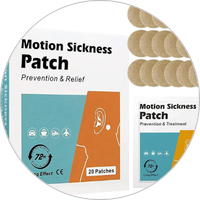 I got these Sea Sicknes Patches (Canada) and the reviews are great. or side effects. The herbal formula is safe and effective for men, women, teens, and kids four years and up to relieve motion sickness. It’s 100% Natural Herb with no pills and they offer complete relief without the side effects associated with pills and other medications.
Acupressure Wristbands
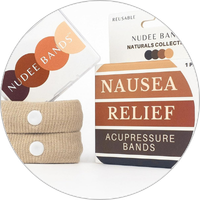 I get acupuncture once a month so I know this point all too well. Products like these Acupressure Sea Bands apply gentle pressure to the P6 (Nei-Kuan) acupressure point on the inner wrist. I swear by this acupressure point and use it all the time, especially during landings on the plane and it almost always immediately relieves the nausea. There are no side effects either!
Eat Light and Stay Hydrated
 An empty stomach and a greasy, heavy stomach are both miserable companions on a rocky ship. Stick to light, bland foods during rough patches – crackers, bread, bananas. Ginger in any form (ginger ale, ginger candies, ginger tea) has genuine anti-nausea properties. These are the Ginger Chews I get all the time (even just going about my day to day), they are tasty, and they work like a charm!
Get Fresh Air and Fix Your Gaze
If you start to feel queasy, head outside to an open deck at the midship level and look at the horizon. This gives your eyes and inner ear the same information – movement – and helps resolve the sensory conflict causing your nausea.
Avoid reading or screens below deck. Looking down at a book or phone while the ship is moving is a fast track to feeling terrible. Save the reading for when you’re in port or sitting on deck with a steady horizon in view.
Final Thoughts
If you are new to cruising and want to test the waters (no pun intended), and trying to find the best cruise cabins for motion sickness, the single best thing you can do when booking your cruise is to choose a midship cabin on a lower deck (decks 3–8) and the shortest cruise length (2-3 days). Some ships lower decks are reserved and don’t start until deck 5. If you go in the summer on a Caribbean cruise, I don’t think you will have problems.
I personally always stay on Deck 9 midship balcony and I’ve never had any issue. I always make sure to sail between late March to late August.
Interior cabins in this zone offer the most stability, but a midship oceanview or balcony cabin on a lower deck is a solid alternative.
Avoid bow and stern cabins, and be especially wary of high-deck cabins in those positions. The views might be spectacular, but you won’t be enjoying them if you’re fighting your stomach the whole time.
The ocean is beautiful and with the right cabin, you’ll actually get to enjoy it. Always check the ship’s deck plan before booking and use the midship/low-deck rule as your starting filter. Your future self will be grateful!
Bon Voyage!

RECENT POSTS
























Hey, I’m Marina! Your Canadian travel points enthusiast with a love for elevated stays who also happens to have serious obsession with cruising. I share real-world tips, strategies, and lessons from my own travels to help you unlock luxury experiences without the luxury price tag.
Love What I Wrote? Please Share! ♥