How to Travel Free with Points
Showing you the best places to wander and how to choose the best travel rewards credit cards that turn everyday spending into free flights, hotel stays, and upgrades.
The Old Mill Toronto Haunted: History & Scary Ghost Stories
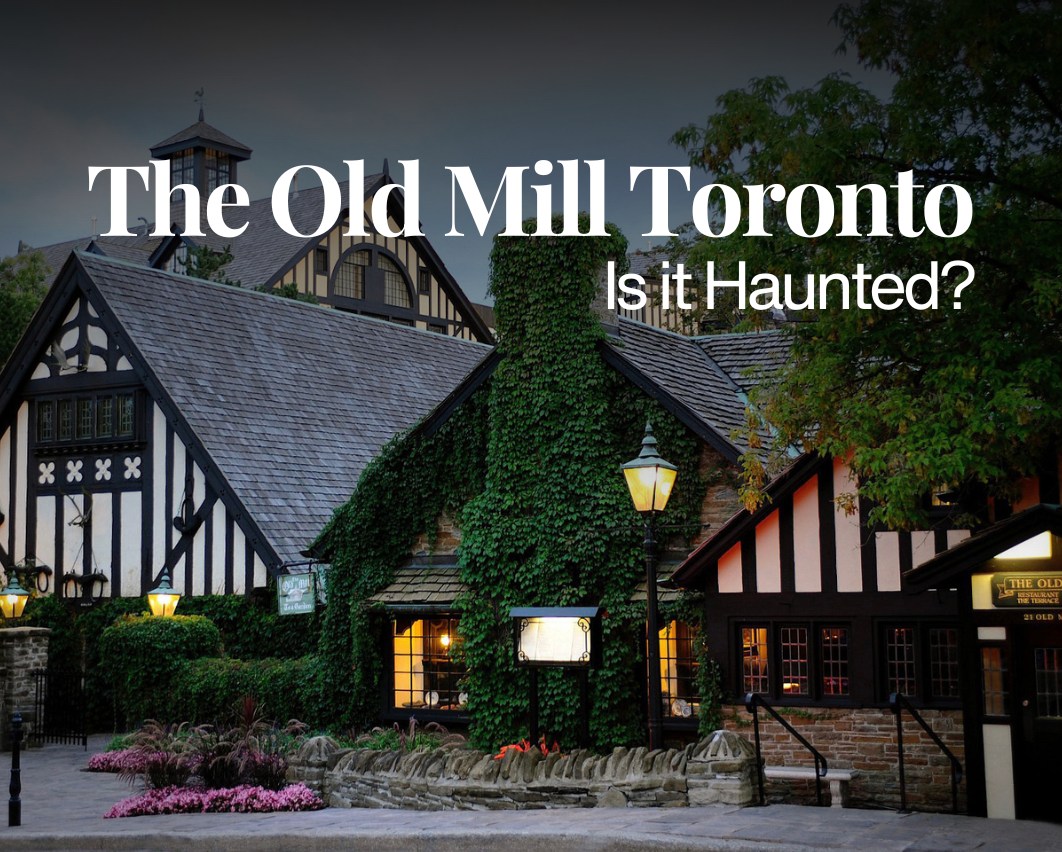
THE GEN X WANDERER / The Old Mill Toronto Haunted: History & Ghost Stories / Image Source: Tripadvisor
TABLE OF CONTENTS
- The Old Mill Toronto: A 230-Year Journey from Sawmill to Spirit-Filled Landmark
- 1793: Toronto’s First Industrial Building Rises on the Humber
- A Century of Fire, Rebuilding, and Industry
- 1914: From Industrial Ruin to Beloved Tea Garden
- Mid-Century Growth and Heritage Recognition
- 2001: A Modern Hotel Rises from the Ruins
- Book Your Stay at The Old Mill Toronto!
- The Old Mill Toronto Haunted Legends Begin
- Strange Encounters at the Old Mill TTC Subway Station
- Why the Legends Persist
- Visiting the Old Mill Toronto Today
- FAQ
- Book Your Toronto Ghost Tour!
Don’t forget to check out my Toronto Series!
• Coming to Toronto? The Ultimate Toronto City Guide on Where to Stay
• Limited time? Check out the best of Toronto in 5 Days
• Love smaller hotels? The Best Boutique Hotels in Toronto Downtown: 6 Main Neighbourhoods Guide
• Toronto Harbourfront guide: Discover the 10 Best Stays & Things to Do Along Toronto’s Waterfront
• Staying for TIFF? Check out the Best Hotel Stays and Eateries Nearby
• Is the Old Mill haunted? Here’s What the Security Guard Told Me When I Went for an Event
Toronto Experiences
• New to the Toronto and need something to do? Check out these Toronto City Attractions
• Love all things and anything spooky? Check out my Toronto Haunts Curated Experiences
The Old Mill Toronto: A 230-Year Journey from Sawmill to Spirit-Filled Landmark
Few addresses in Toronto carry as much layered history, romance, and quiet mystery as the grounds along Old Mill Road beside the Humber River.
Long before it became a premier event venue and boutique hotel, this site was a working industrial mill, then a riverside tea garden, and eventually one of the city’s most talked-about haunted locations.
Anyone searching for the Old Mill Toronto haunted legends will find a story that blends documented heritage with generations of ghost sightings, making it one of the most fascinating destinations in the Greater Toronto Area for history lovers and paranormal enthusiasts alike.
We were recently invited to an event at the The Old Mill Toronto and while I have lived here for 46 years, I’ve never actually been there until now.
After the event, my husband and I wandered the empty halls and banquet rooms and let me tell you, some nooks and crannies made spine shiver. We encountered a security / manager who I think we actually spooked because he wasn’t expecting us to be wandering, especially in this loft area that was pitch black, and then we had a brief conversation about how he has heard things and have learned to “co-exist”. 😳
1793: Toronto’s First Industrial Building Rises on the Humber
The story begins in 1793, the same year the Town of York (later renamed Toronto) was founded. Lieutenant Governor John Graves Simcoe ordered a sawmill built on the west bank of the Humber River to supply lumber for the growing settlement. Known as King’s Mill, it became Toronto’s very first industrial structure, built with the help of a millwright named Nicholas Miller and members of the Queen’s Rangers. Long before European settlers arrived, this stretch of riverbank had already served as a vital crossing point along the ancient Toronto Carrying-Place Trail, a portage route used by Indigenous nations for thousands of years.

A Century of Fire, Rebuilding, and Industry
What followed King’s Mill was a remarkable cycle of destruction and renewal. The original sawmill changed hands several times over the decades. Merchant miller Thomas Fisher took over the property in the 1820s, replacing the original structure with a grist mill by the mid-1830s. The land was later purchased by William Gamble, Etobicoke’s first reeve, who built a larger mill in 1838. That structure burned down in 1849, and Gamble rebuilt once again using local stone and heavy timber sourced from the Humber Valley. Despite his efforts, financial troubles caught up with him, and the Bank of Upper Canada foreclosed on his mortgages in the early 1860s.
The final iteration of the mill, completed under builder William Tyrell, stood seven storeys tall and operated until 1881, when a devastating fire reduced it to ruins for the last time. Remarkably, those skeletal stone ruins remained standing on the property for well over a century, becoming a quiet, atmospheric landmark long after the mill itself stopped operating.
1914: From Industrial Ruin to Beloved Tea Garden
The transformation that shaped the Old Mill into the destination people recognize today began in 1914, when developer Robert Home Smith opened the Old Mill Tea Garden directly beside the crumbling mill ruins. Home Smith, who was also developing the surrounding Kingsway neighbourhood, envisioned the property as “a little bit of England far from England,” and the Tudor Revival architecture he commissioned still defines the buildings today.
The tea garden quickly became a community gathering spot, complete with a boathouse, canoe livery, tennis courts, and even a small golf course. By the 1920s, additions like the Print Room turned the property into a hub for elegant dinner and dancing, with live orchestras providing the soundtrack for an entire generation of Torontonians. The tradition of music and dancing at the Old Mill has continued, in various forms, for more than a century.
Mid-Century Growth and Heritage Recognition
Expansion continued steadily through the twentieth century. New banquet rooms were added in the 1950s overlooking the Humber Valley, and the property weathered Hurricane Hazel in 1954 with minimal damage, even as the storm devastated much of the surrounding city. Skyline Hotels took ownership in 1973 and oversaw a major renovation that added new dining rooms, ballrooms, and a wedding chapel. A decade later, in 1983, the City of Etobicoke formally designated the Old Mill ruins and grounds as a heritage property, a status the site still holds within the City of Toronto today.
2001: A Modern Hotel Rises from the Ruins
The most significant transformation came at the turn of the millennium. In 2000, the centuries-old mill ruins, which had stood as a picturesque backdrop for nearly 120 years, were carefully dismantled. The following year, in 2001, a new boutique hotel opened on the site, designed to echo the Tudor Revival style of the original 1914 buildings, with original stones from the historic ruins incorporated directly into the new structure’s exterior walls.
Today, the Old Mill Toronto operates as a sprawling complex spanning roughly 800,000 square feet, featuring sixteen ballrooms, a boutique inn with dozens of individually decorated guest rooms, a full-service spa, and a restaurant that has served afternoon tea continuously since 1914. It remains a top choice for weddings, corporate events, and special celebrations, all set against the backdrop of the Humber River, the historic 1916 stone bridge, and centuries of accumulated history.
Book Your Stay at The Old Mill Toronto!
The Old Mill Toronto Haunted Legends Begin
With more than two centuries of industrial accidents, fires, financial ruin, and personal tragedy tied to this stretch of riverbank, it is perhaps no surprise that ghost stories have followed the property for generations. Local paranormal researchers and longtime Toronto residents have long described this haunted riverside landmark, centered primarily around the historic stone bridge and the wooded pathways along the Humber River just steps from the hotel itself.
The most frequently reported figure is a woman in a flowing white dress, often described near the Old Mill bridge late at night. This kind of apparition, sometimes called a “Lady in White” or “White Lady,” is one of the most enduring ghost archetypes found across Canada and around the world, typically associated with heartbreak, loss, or tragedy near water and bridges. Toronto has its own collection of similar legends, but the figure tied to the Old Mill is among the most consistently reported in local ghost-hunting circles.
- Check out this article from Toronto.com that substantiates what I’m saying!
- And this one from Cornerstory about the White Lady!
One well-documented account, shared by a couple who encountered something unusual near the bridge late one summer night, describes two indistinct figures appearing near the riverbank before vanishing without explanation. The witnesses also described a nearby streetlamp flickering on and off at irregular intervals throughout the encounter, a detail that recurs in several other reported sightings from the same stretch of path. While the identity of the woman in white has never been confirmed through any historical record, the Old Mill Toronto haunted folklore persists, passed along by visitors, staff, and curious ghost-tour groups exploring the Kingsway neighbourhood.
Strange Encounters at the Old Mill TTC Subway Station
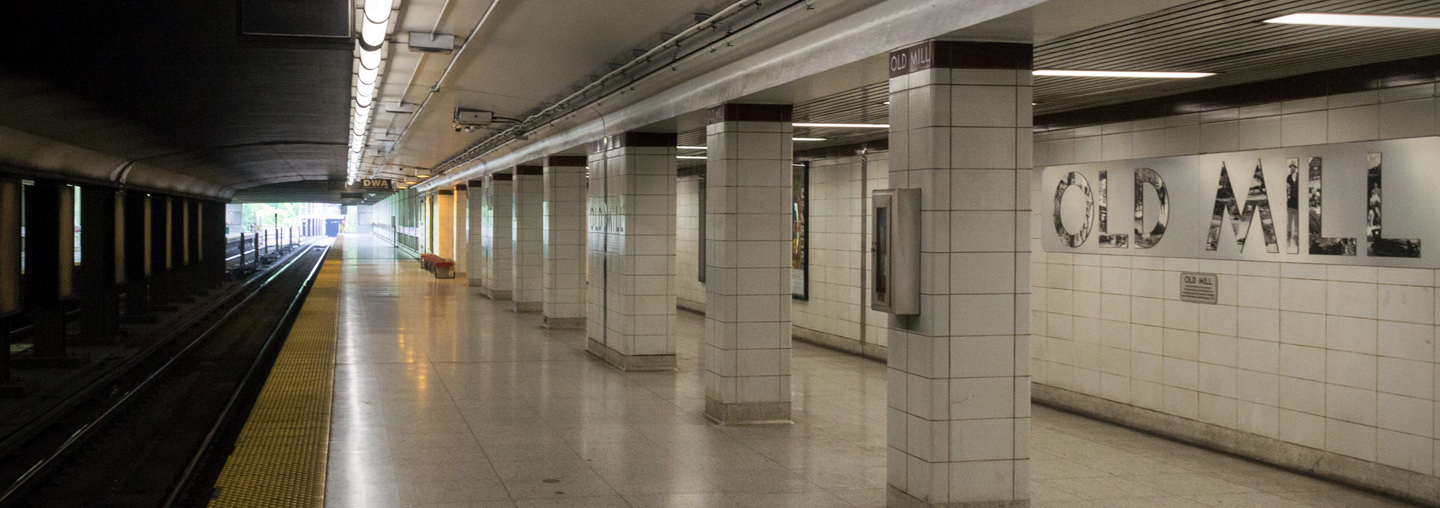
The haunted reputation tied to this stretch of the Humber Valley doesn’t stop at the hotel grounds. Just a short walk away, the Old Mill subway station, which opened in 1968 on the Bloor-Danforth line, has its own collection of unsettling stories among transit workers.
One account describes a TTC maintenance worker on overnight track duty who watched his coworker walk several hundred feet up the dark tunnel to retrieve warning lights, only to turn around moments later and find no one behind him, despite hearing footsteps approaching. When the coworker eventually reappeared from the tunnel ahead of him rather than behind, the rattled worker was told this wasn’t an isolated incident. Other transit staff reportedly described hearing a woman’s voice whispering in that same stretch of tunnel, alongside an older, recurring story involving the apparition of a woman and child wandering the tracks near Old Mill station after hours.
Because the subway platform sits directly above the Humber River valley, just steps from both the historic stone bridge and the hotel itself, many longtime residents consider the station, the bridge, and the surrounding ravine paths to be part of one continuous haunted stretch rather than separate, unrelated locations. Whether the tunnel whispers and the white-clad figure near the bridge are connected remains, like so much of this folklore, impossible to confirm.
Why the Legends Persist
Several factors make the Old Mill an especially compelling setting for ghost stories. The site’s long history of repeated fires destroying earlier mill structures left behind a literal landscape of ruins for well over a century, and ruins have always captured the imagination as places where the past seems to linger. The proximity to the Humber River and its 1916 stone bridge also fits a recognizable pattern in ghost folklore worldwide, where bridges and waterways are frequently described as thresholds between the world of the living and the supernatural.
Add to this the emotional weight of more than two hundred years of human activity on the same patch of riverbank, including industrial accidents, a major bank foreclosure, and the kind of personal struggles that come with any long-running business, and it becomes easier to understand why so many visitors walk away from the Old Mill convinced they felt, heard, or saw something they cannot fully explain.
Visiting the Old Mill Toronto Today
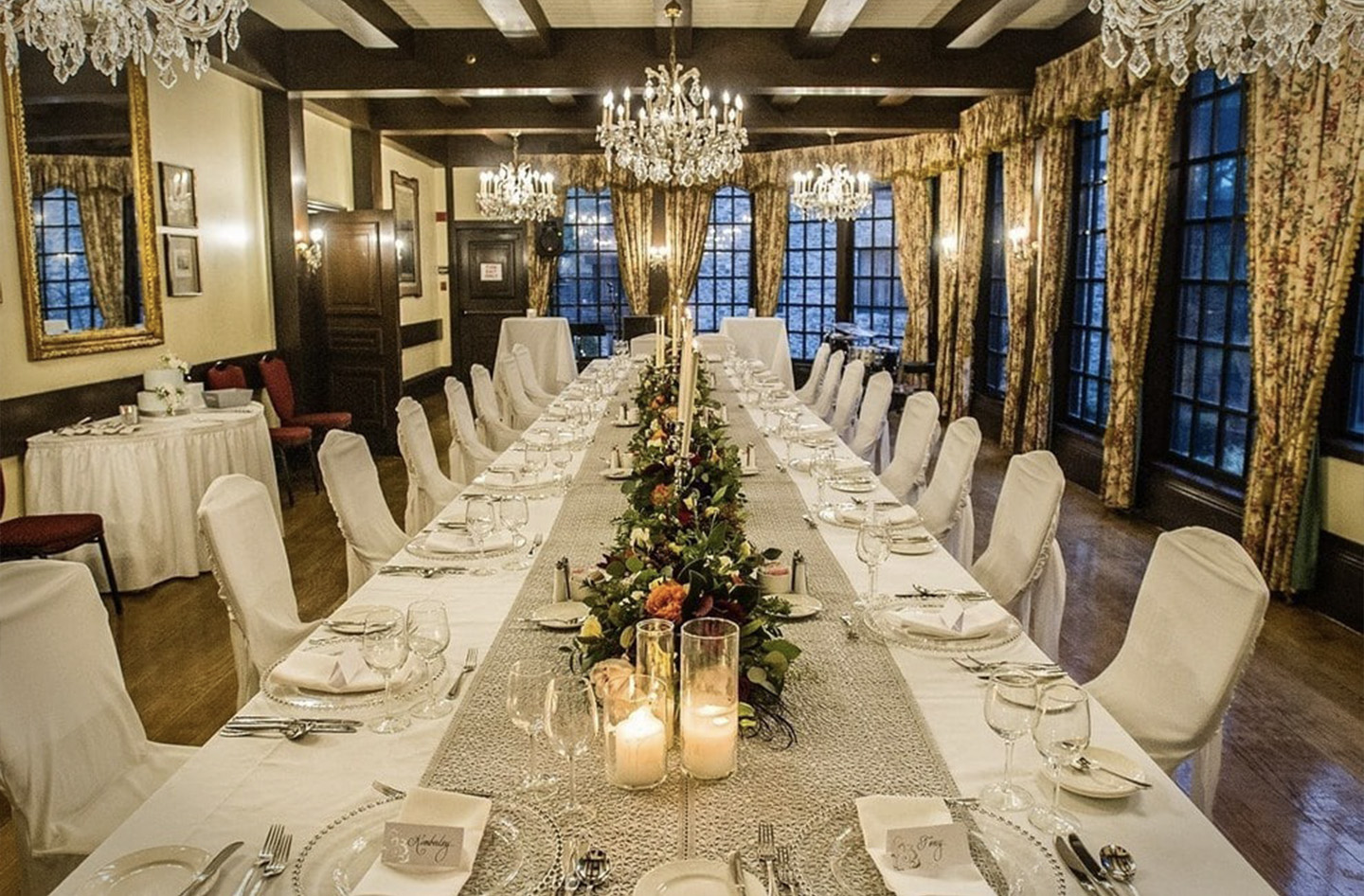
Whether guests come for the history, the haunted reputation, or simply the elegant event spaces and award-winning hospitality, the Old Mill Toronto remains one of the city’s most distinctive destinations. The boutique hotel offers individually decorated rooms, many featuring fireplaces and soaking tubs, while the spa, restaurant, and sixteen ballrooms continue the property’s long tradition as a gathering place for celebrations of every kind. The grounds are a short walk from the Old Mill subway station, making it easy to explore the historic bridge, the surrounding Etienne Brule Park, and the wooded riverside paths where so many of the haunted Old Mill Toronto stories are said to take place.
For those drawn to the supernatural side of Toronto’s history, an evening stroll across the old stone bridge after sunset, or a late-night wait on the subway platform, offers a glimpse into why the Old Mill Toronto haunted reputation has captured local imagination for so long. Between the centuries of fires, rebuilds, and quiet riverside tragedy, and the modern elegance of today’s event venue and hotel, the Old Mill Toronto haunted reputation has become as much a part of its identity as its Tudor architecture and afternoon tea service.
From a 1793 sawmill ordered by Upper Canada’s first lieutenant governor to a celebrated 2001 boutique hotel built from the very stones of its own ruins, the Old Mill has spent more than two centuries reinventing itself while quietly accumulating the kind of layered, atmospheric history that ghost stories are made of. Whether or not the Lady in White truly walks the riverbank at night, the Old Mill Toronto haunted legend has become an inseparable part of one of the city’s most beloved historic landmarks.
FAQ
For summer, yes! Especially weekends. For Pride Weekend, absolutely and immediately. For shoulder season and winter you have more flexibility, though the best-value boutique hotel rooms still fill up. 2-4 weeks out is usually fine outside of peak season.
Yes. It’s one of the safest major cities in North America. But as with anywhere you go, be aware of your surroundings. Standard urban awareness applies.
3-5 nights covers the highlights. 5-7 nights lets you explore properly, including a day trip to Niagara Falls (90 minutes, worth every minute of the drive). 10 days and you start feeling like a local, which after 46 years here I can confirm is a good feeling.
Relative to comparable North American cities it’s reasonable. Mid-range hotels in central neighbourhoods run $180–$250/night. Budget options exist from $110. Luxury starts around $300 and climbs from there. Shoulder season (May and October) is where the value is.
King West. It’s central, atmospheric, walkable, and gives you an honest sense of what this city has become. The CN Tower area works if you’re prioritizing convenience over character.
Toronto has strict short-term rental rules (I know, I use to be one a landlord), hosts must register with the city and can only rent their primary residence. In practice this limits supply significantly. You’ll find fewer options, higher prices relative to hotels, and more uncertainty than you’d expect for a city this size.
For most visitors, a hotel booked through a major platform gives you better price certainty and real consumer protection. The hotel options in Toronto’s core neighbourhoods are good enough that Airbnb rarely wins on value here anyway.
Peak season (June – September): Hotels run 20–40% higher. Book 6 – 8 weeks out minimum. Pride Weekend in late June is the single busiest hotel weekend of the year – if that’s your trip, book 3–4 months out and expect prices to spike hard.
Shoulder season (April – May and October): My honest recommendation for most visitors. Genuinely pleasant weather, 15–25% cheaper hotels, thinner crowds. October in Toronto with the fall colour in High Park is one of the best things about living here.
Winter (November – March): Underrated and underpriced, and I will argue this until I’m gone. Hotel rates drop 25–40% off peak. The Distillery Christmas Market is genuinely world-class. Skating at Nathan Phillips Square is free and ridiculously fun. And the restaurant scene – arguably Toronto’s greatest strength, does not slow down one bit.
Rental bikes are through Bike Share Toronto.
I don’t recommend driving anywhere by car downtown because it will require patience and a wallet. Parking is around ($30-$50) and you will 10000% encounter lots of traffic. Making a slight wrong turn that should be remedied by a U-turn can cost you a 45 min detour 🙋🏻♀️. The majority of the small arteries downtown are only one way streets and one lane.
Just take the transit system, Uber or walk, unless you are taking a trip to any of the suburbs.
Toronto Transit System (TTC) for the subway, buses, or streetcars. The subway runs north-south on Line 1 (Yonge-University) and east-west on Line 2 (Bloor-Danforth). Most of what you’ll want to reach is on or near Line 1. The streetcars are where Toronto gets its personality. The King (501) and Queen streetcars run east-west through the heart of downtown and are the most useful routes for visitors. Get a Presto card at any subway station. It’s Toronto’s version of an Oyster card. Tap on, tap off, free transfers within two hours.
Yes! Everything is walkable but to get from east to west, you will most likely need to take the transit system.
Book Your Toronto Ghost Tour!

RECENT POSTS




















Hey, I’m Marina! Your Canadian travel points enthusiast with a love for elevated stays who also happens to have serious obsession with cruising. I share real-world tips, strategies, and lessons from my own travels to help you unlock luxury experiences without the luxury price tag.
Love What I Wrote? Please Share! ♥