How to Travel Free with Points
Showing you the best places to wander and how to choose the best travel rewards credit cards that turn everyday spending into free flights, hotel stays, and upgrades.
Toronto in 5 Days: The Ultimate Summer Itinerary (2026)
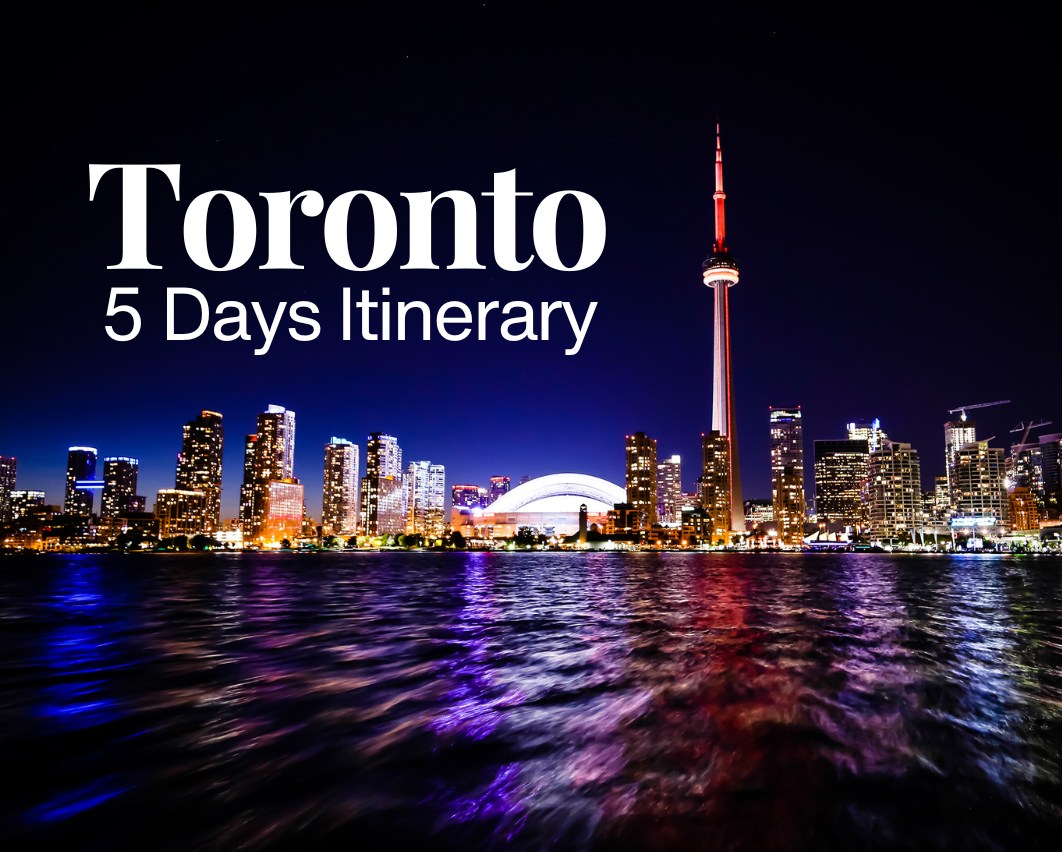
THE GEN X WANDERER / Toronto in 5 Days: The Ultimate Summer Itinerary
TABLE OF CONTENTS
- Toronto in 5 Days
- 6 Mid-Range Hotels for this Itinerary
- Day 1: Downtown Landmarks and the Waterfront
- Day 2: Culture and the Financial District
- Day 3: Kensington Market, Chinatown, and the Eaton Center
- Day 4: Neighbourhoods Beyond Downtown
- Day 5: Casa Loma and a Slower Last Day
- FAQ
- Final Thoughts
- Things to do in Toronto!
Toronto in 5 Days
I’ve been a Toronto resident for over 46 years so I can confidently say that I know this city! 😁
Toronto in summer is a different city than the rest of the year. Patios spill onto sidewalks, the Toronto Islands fill with people escaping the heat by ferry, and neighbourhoods like Kensington Market and Queen West feel like they never stop moving. Five days is enough time to hit the big landmarks and still wander into the pockets of the city that make it worth returning to.
This itinerary is built for a first-time summer visit: a manageable pace, a mix of iconic sights and local neighbourhoods, and enough flexibility to swap things around if the weather or your energy levels change. Below you’ll find a day-by-day plan and five mid-range hotels to base yourself in. You don’t even need to be a first timer, I’ve been here so long, sometimes I need to re-acquaint myself!
6 Mid-Range Hotels for this Itinerary
Choosing where to stay can shape your entire trip, so here are 6 excellent options to see the major attractions for Toronto in 5 days. These options sit in the moderate price tier, generally three to 3.5 stars, without straying into budget or luxury territory.
*My logo in this map marks the vicinity. If you zoom out, you will see all of the partner hotels listed below with a gold hotel icon. You will also see all the location attractions with a star or food icon.*
Don’t forget to check out my Toronto Series!
• Coming to Toronto? The Ultimate Toronto City Guide on Where to Stay
• Limited time? Check out the best of Toronto in 5 Days
• Love smaller hotels? The Best Boutique Hotels in Toronto Downtown: 6 Main Neighbourhoods Guide
• Toronto Harbourfront guide: Discover the 10 Best Stays & Things to Do Along Toronto’s Waterfront
• Staying for TIFF? Check out the Best Hotel Stays and Eateries Nearby
• Is the Old Mill haunted? Here’s What the Security Guard Told Me When I Went for an Event
Toronto Experiences
• New to the Toronto and need something to do? Check out these Toronto City Attractions
• Love all things and anything spooky? Check out my Toronto Haunts Curated Experiences
Morning Sounds of Downtown TO
My stay at Le Germain Maple Leaf Square
Day 1: Downtown Landmarks and the Waterfront
This might be considered a long day, especially for us Gen X’ers, but if you love the adventure go for it. You can also skip any one of these suggestions.
- Start where most Toronto trips start: the CN Tower (2-4 Hours). Go in the morning to beat the crowds and the midday heat. The LookOut Level and the glass floor give you a first real sense of the city’s scale, and on a clear summer day you can see across Lake Ontario. If you want a bigger thrill, the EdgeWalk lets you walk the outer edge of the tower, harnessed in, 116 stories up. There is also a restaurant at the top of the CN Tower called 360 Restaurant, which slowly rotates so you experience all the awesome views of Toronto. I’ve been here a few times and the views are breathtaking. If you are wanting to go here for dinner, you can move this itinerary to the last thing you do at the end of the day, visit the CN Tower, then go to the restaurant.
- Right next door is Ripley’s Aquarium of Canada (2 Hours), a good stop if you’re traveling with kids or just want an air-conditioned break. From there, walk down to the waterfront. Toronto’s Harbourfront in summer is full of outdoor patios, public art installations, and food markets, and it’s an easy, flat walk along the water.
- In the afternoon, catch a ferry to the Toronto Islands (3-5 Hours). This can actually be a whole entire day unto itself or even half a day. This is one of the best summer activities in the city: bike rentals, small beaches, skyline views from across the water, and a genuinely different pace from downtown. Give yourself at least three hours here if you can. Bring sunscreen; there’s not a lot of shade on the beaches.
- Head back downtown for dinner. The Distillery District (2 Hours), a car-free area of restored Victorian-era industrial buildings, is a good choice for your first evening. It’s full of restaurants, breweries, and galleries, and it photographs beautifully in the early evening light.
Day 2: Culture and the Financial District
Devote your second day to Toronto’s museums and historic architecture.
- The Royal Ontario Museum (ROM) is one of the largest museums in North America, with strong natural history and world culture collections, and the Daniel Libeskind-designed crystal extension is worth seeing from the outside even if you don’t go in.
- From there, it’s a short walk to the Art Gallery of Ontario (AGO), which holds an extensive Canadian art collection alongside major international works.
- Between the two, wander through Yorkville, the upscale shopping neighborhood just north of the museums. It’s a good spot for a coffee break or window shopping, even if you’re not buying.
- In the afternoon, head into the Financial District to see Toronto’s older architecture up close: Old City Hall, the Flatiron-style Gooderham Building, and the interior of Union Station, which recently underwent a major restoration and is worth walking through even if you’re not catching a train.
- For dinner, St. Lawrence Market is a Toronto institution and a good way to sample the city’s food scene in one place. It’s busiest earlier in the day, but several vendors stay open into the evening, and the surrounding Old Town streets have plenty of restaurant options.

Day 3: Kensington Market, Chinatown, and the Eaton Center
Day three is for wandering rather than checklist sightseeing. Start in Kensington Market, a dense, colorful neighbourhood of vintage shops, independent cafes, and street murals. It’s one of the few parts of downtown Toronto that still feels unplanned and a little chaotic, in a good way. Grab a coffee or an empanada and just walk the side streets.
Kensington Market runs directly into Chinatown, so keep walking west along Dundas or Spadina for dim sum or a quick lunch.
From there, head east on Dundas until you hit Eaton Centre, Toronto’s largest shopping mall. You could spend a good 3-4 hours here just shopping and wandering.
Eaton Centre spans between Dundas and Queen, so it’s easy to head west on Queen again, and hit Nathan Phillips Square (where Toronto City hall is located) and grab a bite around here for dinner!
Day 4: Neighbourhoods Beyond Downtown
Use your fourth day to get outside the downtown core, which is where a lot of Toronto’s character actually lives. The Beaches neighbourhood, in the city’s east end, has a long boardwalk along Lake Ontario, a sandy beach, and a laid-back main street lined with cafes. It’s an easy streetcar ride from downtown and feels like a small lake town despite being inside the city.
Alternatively, if you’d rather stay closer to the core, spend the morning in Little Italy or Greektown, both known for strong coffee culture and patio dining, then head to High Park in the afternoon. High Park is Toronto’s largest public park, with hiking trails, a small zoo, and, if you happen to visit during cherry blossom season, one of the city’s most photographed spots (though by summer the blossoms will be long gone, the park itself is still worth the visit for its size and shade).
In the evening, consider catching a Blue Jays game at Rogers Centre if the team is in town during your visit, or a concert at one of the city’s smaller venues. If you are here for a large concert at the Scotiabank Arena, swap out of of these days to match your concert itinerary! Toronto’s live music scene is active year-round, but summer brings outdoor festivals and concerts that are worth checking for before your trip.
Day 5: Casa Loma and a Slower Last Day
Save something lighter for your final day, since you’ll likely be tired from four days of walking. Casa Loma, a restored early-1900s castle in midtown Toronto, is a good half-day activity: the gardens are especially pleasant in summer, and the building itself is one of the more unusual things to see in the city.
Spend the rest of the day revisiting whatever you liked most, or filling in gaps you missed. If you didn’t make it to Yonge-Dundas Square where Eaton Centre is, it’s worth a quick stop for the sheer energy of the place. If you have time before a flight or train, this place is a convenient last stop for souvenirs and is centrally located near most downtown hotels.
Close out the trip with a rooftop patio like The One Eighty. We use to frequent here way back when it was called The Aquarius, then Panorama Lounge. It’s located on the 51st floor of the Manulife building and the views are incredible.
1. Chelsea Hotel Toronto
A large, family-friendly hotel near the Eaton Centre and the Financial District, with an indoor waterslide, an arcade, and a central location that makes it easy to walk to most downtown attractions.
2. Delta Hotels Toronto
I’ve stayed here several times and this is my go to when redeeming my free night per year stay with Marriott Bonvoy. Part of the Marriott family, this hotel is close to the CN Tower and Scotiabank Arena, with an indoor pool, fitness center, and pet-friendly rooms, making it a solid all-around option for a downtown stay.
3. Holiday Inn Toronto Downtown Centre
Reliable and centrally located near the Eaton Centre and the Art Gallery of Ontario, with an indoor pool and consistent mid-range pricing throughout the summer season.
4. Toronto Marriott City Centre Hotel
Built directly into the Rogers Centre, this hotel is a good choice if you’re planning to catch a Blue Jays game or want to be within walking distance of the CN Tower and the waterfront.
5. Radisson Blu Toronto Downtown
A boutique-style waterfront hotel with skyline and lake views, a rooftop pool, and a location a few blocks from Rogers Centre, making it a good base for both sightseeing and evening entertainment. If you are more into boutique hotels, check out my round of Boutique Hotels Stays in Toronto.
6. Le Germain Maple Leaf Square
Right on the edge of the Financial District and at the base of Scotiabank Arena, sits Le Germain Maple Leaf Square. I’ve stayed here a few times so check out my video a the top of this page! It’s an easy walk to Union Station, the CN Tower, and the Harbourfront, which makes it a smart pick if your trip is built around a game or a conference downtown.
FAQ
For summer, yes! Especially weekends. For Pride Weekend, absolutely and immediately. For shoulder season and winter you have more flexibility, though the best-value boutique hotel rooms still fill up. 2-4 weeks out is usually fine outside of peak season.
Yes. It’s one of the safest major cities in North America. But as with anywhere you go, be aware of your surroundings. Standard urban awareness applies.
3-5 nights covers the highlights. 5-7 nights lets you explore properly, including a day trip to Niagara Falls (90 minutes, worth every minute of the drive). 10 days and you start feeling like a local, which after 46 years here I can confirm is a good feeling.
Relative to comparable North American cities it’s reasonable. Mid-range hotels in central neighbourhoods run $180–$250/night. Budget options exist from $110. Luxury starts around $300 and climbs from there. Shoulder season (May and October) is where the value is.
King West. It’s central, atmospheric, walkable, and gives you an honest sense of what this city has become. The CN Tower area works if you’re prioritizing convenience over character.
Toronto has strict short-term rental rules (I know, I use to be one a landlord), hosts must register with the city and can only rent their primary residence. In practice this limits supply significantly. You’ll find fewer options, higher prices relative to hotels, and more uncertainty than you’d expect for a city this size.
For most visitors, a hotel booked through a major platform gives you better price certainty and real consumer protection. The hotel options in Toronto’s core neighbourhoods are good enough that Airbnb rarely wins on value here anyway.
Peak season (June – September): Hotels run 20–40% higher. Book 6 – 8 weeks out minimum. Pride Weekend in late June is the single busiest hotel weekend of the year – if that’s your trip, book 3–4 months out and expect prices to spike hard.
Shoulder season (April – May and October): My honest recommendation for most visitors. Genuinely pleasant weather, 15–25% cheaper hotels, thinner crowds. October in Toronto with the fall colour in High Park is one of the best things about living here.
Winter (November – March): Underrated and underpriced, and I will argue this until I’m gone. Hotel rates drop 25–40% off peak. The Distillery Christmas Market is genuinely world-class. Skating at Nathan Phillips Square is free and ridiculously fun. And the restaurant scene – arguably Toronto’s greatest strength, does not slow down one bit.
Rental bikes are through Bike Share Toronto.
I don’t recommend driving anywhere by car downtown because it will require patience and a wallet. Parking is around ($30-$50) and you will 10000% encounter lots of traffic. Making a slight wrong turn that should be remedied by a U-turn can cost you a 45 min detour 🙋🏻♀️. The majority of the small arteries downtown are only one way streets and one lane.
Just take the transit system, Uber or walk, unless you are taking a trip to any of the suburbs.
Toronto Transit System (TTC) for the subway, buses, or streetcars. The subway runs north-south on Line 1 (Yonge-University) and east-west on Line 2 (Bloor-Danforth). Most of what you’ll want to reach is on or near Line 1. The streetcars are where Toronto gets its personality. The King (501) and Queen streetcars run east-west through the heart of downtown and are the most useful routes for visitors. Get a Presto card at any subway station. It’s Toronto’s version of an Oyster card. Tap on, tap off, free transfers within two hours.
Yes! Everything is walkable but to get from east to west, you will most likely need to take the transit system.
Final Thoughts
Five days is a good amount of time to get a real feel for Toronto without rushing through it. The itinerary above balances the major landmarks tourists expect with the neighbourhood-level wandering that tends to leave the strongest impression. Build in some flexibility for weather and energy levels, especially in summer heat, and don’t be afraid to cut a stop if a neighborhood pulls you in longer than planned. That’s usually where the best parts of a trip happen anyway.
Things to do in Toronto!

RECENT POSTS

















Hey, I’m Marina! Your Canadian travel points enthusiast with a love for elevated stays who also happens to have serious obsession with cruising. I share real-world tips, strategies, and lessons from my own travels to help you unlock luxury experiences without the luxury price tag.
Love What I Wrote? Please Share! ♥